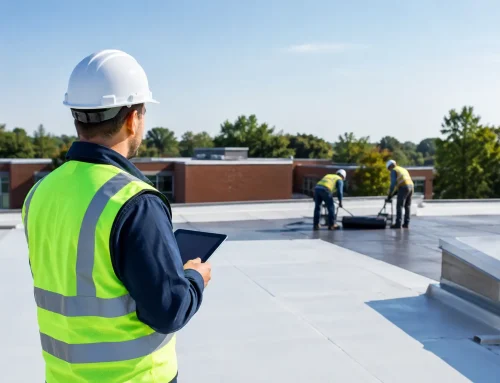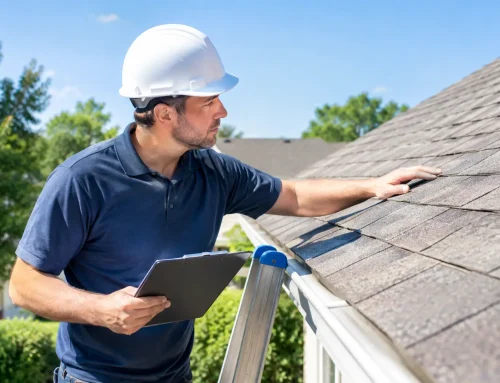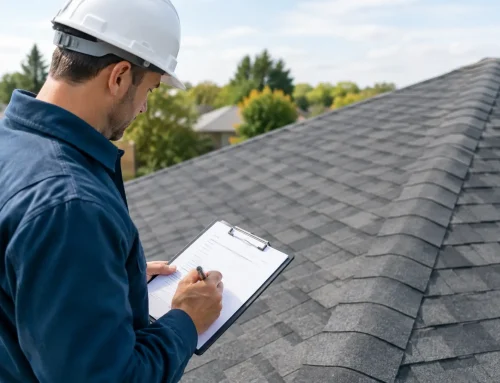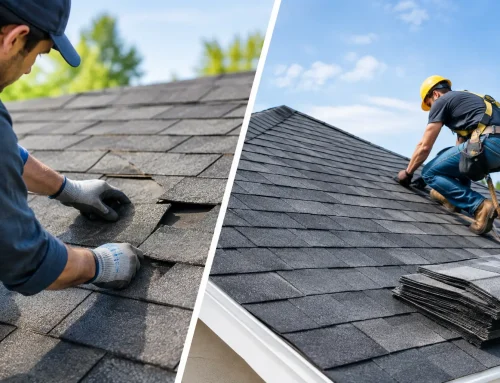

A roof leak over a conference room, tenant suite, server closet, or electrical panel can turn one storm-damaged area into a costly building-wide problem. Office building tarping is the immediate protective step that helps keep rain out while the damage is inspected, documented, and prepared for permanent repair. When it is installed correctly, a tarp buys time. When it is delayed or poorly secured, it can leave the property exposed to further loss.
Why Office Building Tarping Matters After a Storm
Storm damage does not always look dramatic from the ground. Wind can lift membrane seams, tear flashing, dislodge coping, puncture low-slope roofing, or blow debris across the roof surface. Hail can bruise or fracture materials that were already nearing the end of their service life. Once water has a path inside, it may travel beneath insulation or decking before appearing on a ceiling tile several rooms away.
That is why a temporary tarp should not be treated as a cosmetic cover. Its purpose is to reduce active water intrusion and protect the areas below the roof until a qualified contractor can determine what failed. For office owners and property managers, that may mean preventing damage to tenant improvements, flooring, furniture, files, inventory, and essential equipment.
A prompt tarp can also help limit business interruption. Keeping one affected area dry may allow the rest of the building to remain usable while repair plans move forward. The exact outcome depends on the extent of the damage, the roof system, and whether water has reached electrical or structural components, but early action gives the property a better chance of avoiding a larger disruption.
When an Office Building Needs Emergency Tarping
Not every roof issue calls for a tarp. A small, contained leak may require a targeted repair, while a roof with broad storm damage may need a more substantial temporary dry-in method. The right approach starts with a professional inspection, not a guess from the parking lot.
Emergency tarping is often appropriate when a storm has created an open or suspected opening in the roof and rain is expected before permanent repairs can be completed. Visible roof tears, missing materials, fallen limbs, wind-damaged flashing, punctures, and water entering the building are clear warning signs. If ceiling tiles are sagging, water is dripping near outlets, or the building has standing water indoors, keep occupants away from the affected area and address safety first.
Property managers should also be cautious when the roof looks intact but leaks appear after a hail or wind event. Commercial roof systems can sustain damage at seams, penetrations, drains, and perimeter edges that is not obvious from below. Sending maintenance staff onto a wet or damaged roof can create a serious fall hazard and may worsen the problem.
What a Proper Tarp Installation Should Do
A temporary tarp is only useful if it channels water away from the damaged area and remains secure in changing weather. On an office building, that often requires more planning than covering a small residential roof slope. Low-slope roofs, rooftop HVAC equipment, parapet walls, drains, skylights, and multiple transitions all affect how water moves across the surface.
The contractor should first identify the likely point of entry and assess whether the roof deck, insulation, membrane, or flashing has been compromised. Loose debris should be handled safely, and the tarp should extend well beyond the damaged section so wind-driven rain cannot work underneath it. It must be anchored without creating unnecessary new punctures or blocking drainage paths.
Drainage deserves special attention. Water that pools on top of a tarp can add weight, pull fasteners loose, and place additional stress on the roof. A tarp should never be installed in a way that directs water toward rooftop equipment, parapet walls, or areas where it can enter the building elsewhere.
Temporary protection is not a permanent roof repair. Sun exposure, wind, standing water, and repeated storms can weaken tarp materials and attachments. The tarp should be monitored, especially after severe weather, until a lasting repair or replacement is completed.
Protect People and the Building Before Work Begins
A leaking office building presents more than a roofing concern. Water near electrical systems, slick floors, saturated ceiling materials, and compromised roof areas can put employees, tenants, and visitors at risk. Restrict access below the leak, move sensitive equipment when it is safe to do so, and use containers only as a short-term measure to control drips.
Avoid climbing onto the roof or trying to fasten a tarp from a ladder during wind, rain, or lightning. Commercial roofs can have weak areas concealed by water or debris, and roof edges are especially dangerous. A licensed and insured exterior contractor has the training and equipment to evaluate the conditions and complete emergency work with safety in mind.
If the roof damage affects fire protection, electrical service, building access, or critical operations, coordinate with the appropriate building professionals and follow your emergency response plan. A tarp is part of damage control, not a substitute for addressing immediate life-safety issues.
Document the Damage for Your Insurance Claim
For many commercial properties, the days after a storm are also the beginning of an insurance claim. Clear documentation can make a meaningful difference when explaining the scope of the loss. Before cleanup removes visible evidence, record interior water damage, damaged materials, affected rooms, and exterior conditions from safe locations.
Keep notes on when the storm occurred, when the leak was discovered, and what temporary measures were taken. Save invoices and records related to emergency mitigation, including tarping, water removal, and protection of business property. These records can help show that the owner acted reasonably to prevent further damage.
The insurance carrier will determine coverage under the policy, and every claim is different. Still, a detailed professional inspection can help identify storm-related roof damage that may not be apparent in a quick walk-through. Crown Exteriors LLC can inspect the property, document roof conditions, and help owners and managers communicate clearly with the insurance adjuster during the restoration process.
Tarping Is the First Step, Not the Finish Line
Once the building is protected from active water intrusion, the focus should shift to the right permanent solution. That may be a localized repair if damage is limited and the existing roof remains in serviceable condition. In other cases, widespread wind or hail damage, wet insulation, aging materials, or repeated leaks may point to a larger restoration project.
A thorough evaluation should consider more than the visible opening. The contractor may need to inspect flashing, roof penetrations, drainage components, membrane seams, insulation moisture, and the roof deck. Inside the building, ceilings, wall cavities, and flooring may also need attention if water traveled beyond the original leak location.
Do not let a temporary tarp become a long-term maintenance plan. Even a well-installed tarp is exposed to weather and can conceal continuing deterioration below. Scheduling repairs promptly protects the building, supports a cleaner insurance process, and gives tenants confidence that the property is being managed responsibly.
Choosing a Contractor for Commercial Emergency Protection
Office properties need a contractor who understands both the urgency of the situation and the details that follow. Fast response matters, but so do safe work practices, accurate damage documentation, clear communication, and the ability to explain what is temporary versus what the roof will need next.
Ask whether the contractor is licensed and insured, experienced with your type of commercial roof, and prepared to work with property management and insurance representatives. You should receive straightforward information about the visible damage, the purpose and limits of the tarp, and recommended next steps. A dependable contractor will not pressure you into a major project before completing a proper inspection.
When a storm leaves your office building exposed, the goal is simple: stop further water from getting in, protect the people and property below, and create a clear path toward lasting repairs. Acting early with professional office building tarping can help turn a chaotic emergency into a manageable restoration plan.
Related Posts
If you enjoyed reading this, then please explore our other articles below: