
A missing shingle can become a soaked ceiling faster than most property owners expect. Once rain enters through a storm-damaged roof, it can travel along decking, insulation, framing, and electrical pathways before it ever becomes visible indoors. Roof tarping is a temporary measure that helps limit that exposure while your roof is inspected, your claim is documented, and permanent repairs are arranged.
The goal is not to make a damaged roof look better for a few days. The goal is to protect the building from additional damage without creating a safety risk for anyone involved. For homeowners, commercial property managers, and landlords, a properly installed tarp can buy valuable time after wind, hail, falling limbs, or heavy rain.
When Roof Tarping Is Necessary
A tarp is often needed when the roof has an active opening or when damage is likely to allow water inside before repairs can be completed. Common warning signs include missing or lifted shingles, punctures from tree branches, exposed roof decking, torn flashing, or a section of roof that has blown off during severe weather.
Inside the property, look for water spots on ceilings, dripping around light fixtures, wet insulation in an attic, peeling paint, or damp drywall. Water does not always appear directly below the damaged area. It can move across the roof deck or follow framing members, which is why a professional inspection is more reliable than guessing from an interior stain alone.
Not every storm-damaged roof needs a tarp. If shingles are bruised by hail but the roof remains watertight, temporary covering may not be necessary. A qualified roofer should assess the condition, explain what they found, and recommend only the protection your property actually needs.
What to Do Before a Tarp Is Installed
Your first priority after a storm is personal safety. Stay away from downed power lines, unstable trees, and areas where the roof or ceiling appears to be sagging. If water is near electrical fixtures or outlets, turn off power to that area only if it can be done safely, then contact an electrician or emergency professional as needed.
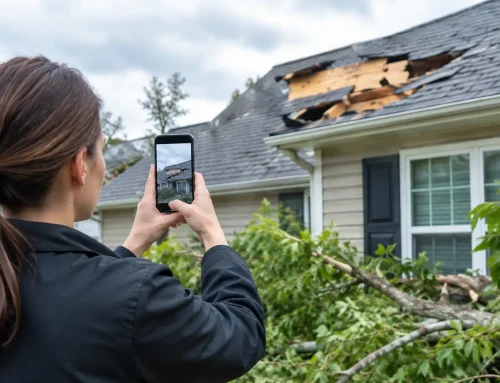
Before cleanup changes the scene, document the damage. Take clear photos and videos from the ground of missing shingles, fallen limbs, damaged gutters, torn siding, and visible water entry. Photograph interior damage as well, including wet flooring, ceilings, furniture, and personal property. Save receipts for reasonable emergency expenses, such as water mitigation or professional tarping.
Then notify your insurance carrier and report the loss according to your policy requirements. A tarp may help prevent further damage, but coverage decisions depend on your policy, the cause of loss, deductibles, and the documentation available. Do not assume that every repair or interior issue will be covered. Good documentation gives your claim a stronger foundation and makes conversations with the adjuster clearer.
Why Professional Roof Tarping Is Safer
Installing a tarp may look straightforward from the ground, but the work involves real risk. Storm-damaged roofs can have weakened decking, loose materials, hidden punctures, and slick surfaces. Add wind, rain, or a steep slope, and a temporary repair can turn into a serious fall hazard.
A professional crew begins by identifying the source and extent of the damage. The tarp should cover the affected area with enough overlap to direct water away from the opening. It must be secured in a way that resists wind while avoiding unnecessary additional damage to the roof. The exact approach depends on the roof’s pitch, material, damage location, weather conditions, and whether the roof can be safely accessed.
Poorly installed tarps can trap water, tear loose in high winds, or direct runoff beneath the covering. They can also make a later inspection more difficult if they conceal the actual damage. The cheapest emergency option is not always the least expensive outcome if it fails during the next rainstorm.
For large commercial roofs, multi-story buildings, tile roofs, metal roofs, or roofs with extensive storm damage, professional evaluation is especially important. These systems require different access methods and temporary protection strategies. A one-size-fits-all tarp installation is rarely the right answer.
Roof Tarping and Your Insurance Claim
Insurance carriers generally expect property owners to take reasonable steps to prevent additional damage after a covered event. That does not mean you should put yourself at risk or begin permanent work before the claim is reviewed. It means acting responsibly once it is safe to do so.
A temporary tarp creates a record that the property was protected after the storm. Keep photos of the roof before and after the tarp is installed, along with the contractor’s inspection notes, invoice, and any emergency service receipt. If water damage expands despite the tarp, document that change too.
It also helps to separate emergency protection from permanent repair decisions. A tarp may be installed the same day, while the full scope of roof replacement, repair, gutter work, siding repair, or interior restoration is determined later. That distinction matters when an adjuster needs to review storm-related damage and assess the proper next steps.
Crown Exteriors LLC can inspect the roof, document storm-related findings, and help property owners understand what to provide during the insurance process. Clear photos, accurate measurements, and a straightforward explanation of damage can reduce confusion at a time when most people are already juggling cleanup, calls, and schedule disruptions.
How Long Can a Roof Tarp Stay in Place?
A tarp is temporary protection, not a replacement roof. Its useful life depends on the quality of the material, how it was secured, sun exposure, wind conditions, ponding water, and the severity of the underlying damage. In calm weather, a professionally installed tarp may hold for weeks. In repeated storms or high winds, it may need to be checked or replaced much sooner.
Inspect the exterior from the ground after major weather events. Watch for loose edges, sagging areas, exposed roof sections, or water entering the building again. Do not climb onto the roof to adjust a tarp yourself. Contact a roofing professional if the tarp shifts, tears, or no longer appears to shed water properly.
Permanent repair should not be delayed simply because a tarp seems to be holding. Moisture can continue affecting roof materials, insulation, and interior finishes through small gaps that are not immediately obvious. The sooner the roof can be properly evaluated and repaired, the more control you have over the scope of the loss.
Choosing the Right Next Step After Storm Damage
After emergency protection is in place, schedule a thorough roof inspection. A good inspection considers more than the obvious opening. It should review shingles or roofing materials, flashings, vents, ridge lines, gutters, fascia, skylights, penetrations, and related exterior components that may have been affected by the same storm.
Ask the contractor to explain whether the damage calls for a targeted repair, a larger repair area, or full replacement. The right answer depends on roof age, material condition, matching availability, the extent of storm damage, and local building requirements. Honest guidance should make the trade-offs clear, not pressure you toward work that does not fit the condition of your property.
A tarp can protect your property through a stressful moment, but it should also be a signal to act. Protect the opening, document the damage, and bring in a qualified roofing professional before the next storm turns a manageable repair into a larger restoration project.
Related Posts
If you enjoyed reading this, then please explore our other articles below: