
A storm can leave a roof vulnerable long before an adjuster, supplier, or repair crew can arrive. In the decision between roof tarping versus shrink wrap, the right choice depends on the type of damage, the weather ahead, the size of the exposed area, and how long the property needs protection. Both methods can help limit additional water damage, but they serve different situations.
For homeowners and property managers, the priority is simple: stop water from entering the building, document the damage, and create a clear path toward permanent repairs. A temporary cover is not the repair itself. It is the protection that buys time to make sound decisions after a storm.
What Emergency Roof Tarping Does
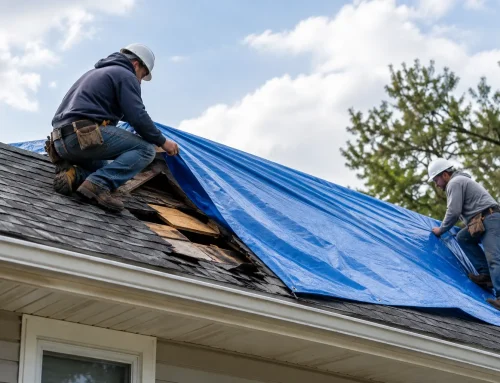
Roof tarping uses a heavy-duty waterproof tarp secured over a damaged section of roof. It is commonly used after wind, hail, falling limbs, or flying debris tear away shingles, puncture roofing materials, or expose decking.
A properly installed tarp extends beyond the damaged area so water sheds over the protected section rather than running underneath it. Roofing professionals typically secure it using methods that balance wind resistance with the need to avoid creating unnecessary new damage to the roof. The exact method depends on the roof pitch, material, damage location, and current weather conditions.
Tarping is often the most practical first response when damage is limited to one area. For example, if a tree branch punches a hole through a shingle roof or wind removes a section of shingles near a ridge, a tarp can quickly cover that opening while the property owner works through inspections and insurance documentation.
When a Tarp Is Usually the Better Choice
A roof tarp generally makes sense when the damage is localized, access is reasonably safe, and permanent repairs can be scheduled relatively soon. It is also a familiar emergency measure for many insurance claims because it shows the property owner took reasonable steps to prevent further damage.
That said, a tarp is only as effective as its installation. A loosely secured tarp can flap in high winds, collect water, allow leaks at the edges, or tear away entirely. Tarping should not be treated as a do-it-yourself project after a major storm, especially if the roof is steep, wet, structurally compromised, or near downed power lines.
What Roof Shrink Wrap Does
Shrink wrap is a heavier temporary containment system that creates a tight protective barrier around part or all of a roof or structure. The material is installed over a framework or secured around the building, then heat-shrunk to create a taut, weather-resistant enclosure.
Unlike a standard tarp placed over a specific damaged spot, shrink wrap can protect a much larger area. It is often considered when storm damage is widespread, the roof has been significantly opened up, or repairs will take longer because of material lead times, permitting, engineering requirements, or a complex insurance claim.
Shrink wrap is frequently used on commercial properties, multifamily buildings, and larger restoration projects. It can also be valuable for residential homes with severe damage, particularly when the roof needs extensive repair or replacement and the forecast includes continued rain, snow, or wind.
When Shrink Wrap May Be Worth the Investment
Shrink wrap can be the stronger option when the building needs more than a patch over one leak. If multiple areas are exposed, the roof decking is compromised, or interior spaces must remain dry while a larger restoration plan is developed, a full containment system may provide more dependable coverage.
It can also be useful when a project will remain open for an extended period. A quality shrink-wrap installation is engineered to remain tight and resist weather better than a standard tarp in many applications. However, it is more labor-intensive and generally costs more than emergency tarping. It also requires trained installation and proper site conditions.
Roof Tarping Versus Shrink Wrap: Key Differences
The main difference between roof tarping versus shrink wrap is the level and duration of protection. A tarp is usually a targeted, short-term response. Shrink wrap is a broader containment solution designed for more extensive damage or longer project timelines.
A tarp can often be installed quickly after a storm, which matters when water is actively entering the home or business. It is a practical choice for a missing-shingle section, a small puncture, or a limited area of wind damage. Its lower cost may also make it appropriate while waiting for a full inspection.
Shrink wrap takes more planning, material, and labor, but it may provide better protection over an entire damaged roof area. It is especially useful when the roof cannot be safely or effectively protected with individual tarps. For a commercial building with widespread membrane damage, or a home undergoing a large tear-off after storm loss, shrink wrap can reduce the risk of repeated water intrusion.
Neither option should be viewed as permanent. Sun exposure, wind, pooling water, falling debris, and shifting roof conditions can all affect temporary protection. Regular monitoring is necessary until permanent repairs are completed.
How Insurance Claims Factor Into the Decision
After storm damage, taking reasonable steps to prevent additional loss is usually part of responsible property ownership. Emergency tarping or shrink wrapping may help protect the building and demonstrate that the owner acted promptly. Keep photos and videos of the damage before temporary protection is installed when it is safe to do so. Save invoices, inspection notes, receipts, and records of any interior water damage.
Temporary protection does not automatically guarantee insurance coverage, and the scope of covered damage depends on the policy, cause of loss, deductible, and adjuster findings. Still, thorough documentation can make the claim process more organized and help distinguish storm damage from damage that occurred later due to ongoing exposure.
A contractor experienced in storm restoration can inspect the roof, document visible conditions, identify immediate mitigation needs, and help explain the repair scope during the claims process. The goal is not to rush into a replacement before the facts are clear. It is to protect the property while making sure the damage is properly evaluated.
Questions to Ask Before Choosing a Temporary Cover
Start by considering where the roof is open and how much water is getting in. A single damaged slope may only need professional tarping. Multiple exposed sections, major structural concerns, or an extended repair schedule may point toward shrink wrap.
The forecast matters, too. A short dry stretch can make a tarp sufficient while inspections and material ordering move forward. Several days of heavy rain, freezing conditions, or high winds create a different risk level. Roof design also matters. Low-slope commercial roofs, steep residential roofs, metal roofing, tile, and shingle systems each require different protection methods.
Finally, consider the interior. If the building contains finished living spaces, inventory, equipment, tenant areas, or sensitive electrical systems, the cost of another water event may be far greater than the cost of stronger temporary protection.
Avoid These Common Mistakes
Do not wait for a small leak to become a ceiling collapse. Water can travel along roof decking, framing, insulation, and wiring before it becomes visible inside. By the time a stain appears, moisture may already be affecting a larger area.
Avoid placing a tarp directly over a roof without securing it correctly. Bricks, loose lumber, and other heavy objects can slide, damage the roof further, or become dangerous in high winds. Also avoid walking on storm-damaged roofing. Missing shingles, wet surfaces, hidden punctures, and weakened decking can make a roof unsafe without warning.
Do not assume a temporary cover means the roof can wait indefinitely. Schedule a professional inspection as soon as conditions allow. The sooner the damage is documented and a repair plan is established, the easier it is to protect the property and move the insurance claim forward.
Get the Right Protection for the Damage You Have
The best choice is rarely about picking the most expensive temporary solution. It is about matching the level of protection to the actual condition of the roof. A professionally installed tarp can be exactly what a localized storm loss needs. A larger shrink-wrap system can be the wiser move when exposure is widespread or repairs will take time.
Crown Exteriors can inspect storm-related roof damage, help document the loss, and recommend practical temporary protection while you plan the next step. If your roof has been damaged, act before the next round of weather turns a manageable repair into a larger restoration project.
Related Posts
If you enjoyed reading this, then please explore our other articles below: